Your Child’s Diagnosis Isn’t Their Destiny: Looking Beyond the Label
If you’re reading this, chances are you know what it feels like to spend months, maybe even years, searching for answers.
The late-night Googling. The specialist appointments. The evaluations and waiting lists. The forms that ask you to describe your child’s hardest days in tiny little boxes. The conflicting opinions from providers who may only see one small piece of the bigger picture.
And then, finally, someone gives you a name for what you’ve been seeing.
Autism. ADHD. Sensory Processing Disorder. Anxiety. A developmental or behavioral diagnosis you’ve been trying to understand for what feels like forever.
For many parents, that moment brings a complicated mix of emotions.
There may be relief because someone finally recognizes that what you’ve been seeing is real. There may be validation after months of wondering if you were overthinking things. And there may also be fear, uncertainty, or even grief as you wonder what this diagnosis means for your child’s future.
Underneath all of it is often one big question:
Will this diagnosis help my child get what they need, or will it become something that limits how the world sees them?
The answer doesn’t have to be one or the other.
A diagnosis can be an incredibly valuable tool. But it should never become the entire story of who your child is.
Why So Many Families Are Searching for Answers
More families today are navigating developmental, behavioral, sensory, emotional, and chronic health challenges with their children.
And while greater awareness and improved screening have absolutely helped more children receive support, many parents are still left asking a deeper question:
Why is my child struggling in the first place?
A diagnosis can help describe a collection of symptoms or behaviors. It can give families language for what they’re experiencing and provide a pathway toward services.
But a diagnosis doesn’t always tell us everything about how that individual child’s body and nervous system are functioning.
At Inspire Life Chiropractic, this is where we encourage families to keep looking at the whole picture.
A child’s development is incredibly complex. Genetics, prenatal health, birth experiences, illness, sleep, nutrition, environmental stressors, medications, sensory input, emotional stress, and countless other factors can influence how a developing nervous system adapts.
Rather than assuming there is one single cause behind a child’s challenges, we believe it’s important to ask:
How well is this child’s nervous system adapting to everything being asked of it?
That question doesn’t replace a diagnosis. It simply gives us another important piece of the puzzle.
The Good: What a Diagnosis Can Give Your Child
There are very real reasons families pursue diagnoses, and those benefits deserve to be recognized.
A diagnosis may provide:
Access to IEPs, 504 Plans, classroom accommodations, and school-based services
Insurance coverage for certain therapies, equipment, and programs
Earlier access to intervention and developmental support
Validation that your child’s challenges are real and deserve attention
Connection with other families navigating similar experiences
A clearer framework for teachers, therapists, caregivers, and family members to understand your child’s needs
For a parent who has spent years advocating for their child, finally receiving that recognition can feel enormous.
The diagnosis may help you understand your child differently. It may give you resources you didn’t have before. It may help teachers recognize that a meltdown isn’t simply “bad behavior,” or that difficulty focusing isn’t a lack of effort.
Those things matter.
The goal isn’t to reject the label. It’s to use it as a tool without allowing it to become your child’s entire identity.
The Other Side: When the Label Becomes the Lens
The challenge comes when a diagnosis stops being one piece of information and starts becoming the lens through which everything about a child is viewed.
Suddenly, instead of:
“What does this child need?”
The question becomes:
“What do kids with this diagnosis usually do?”
Instead of seeing your child’s individual strengths, struggles, personality, environment, and nervous system, it can become easy for everyone around them to see the label first.
Over time, families may experience:
Expectations being lowered too quickly
Every new struggle being attributed to the diagnosis
Different specialists focusing on separate symptoms without always seeing the whole child
Children beginning to define themselves by what they’ve been told they “can’t” do
Care becoming focused primarily on symptom management rather than asking what additional support the child may need
None of this means pursuing a diagnosis was the wrong decision.
It simply means the diagnosis needs boundaries.
Let it explain certain challenges. Let it open doors. Let it help your child receive support.
But don’t let it determine everything you believe is possible for them.
Looking Beyond the Diagnosis to the Nervous System
One piece we believe deserves more attention is the nervous system.
Your child’s nervous system is constantly receiving information from inside and outside of their body, processing that information, and deciding how to respond.
Is this safe?
Do I need to protect myself?
Can I settle down?
Can I focus?
Can I digest?
Can I sleep?
Can I transition from one environment to another?
When the nervous system is under a high stress load, a child may spend more time operating in a protective, fight-or-flight state.
For one child, that may look like constant movement and difficulty focusing.
For another, it may look like anxiety, shutting down, or avoiding certain environments.
Another child may struggle with sensory input, transitions, sleep, emotional regulation, digestion, or frequent meltdowns.
And some children experience several of these challenges at the same time.
That doesn’t mean every diagnosis has the same cause or that nervous system dysregulation explains every developmental condition. It does mean nervous system function is an important part of the bigger picture and one that deserves attention alongside the other care your child receives.
You Don’t Have to Choose Between a Diagnosis and Hope
This is one of the most important things we want parents to hear:
You can accept your child exactly as they are while continuing to support their growth.
You can use the diagnosis to access services without allowing it to define their future.
You can appreciate the support of your pediatrician, OT, speech therapist, counselor, teacher, or other providers while continuing to ask questions about the bigger picture.
You can honor where your child is today while remaining curious about what additional support may help them thrive.
It doesn’t have to be conventional care or holistic care.
It doesn’t have to be accepting the diagnosis or looking deeper.
For many families, the best approach is building a team that looks at the child from multiple angles while keeping the whole child at the center.
A Different Piece of the Puzzle
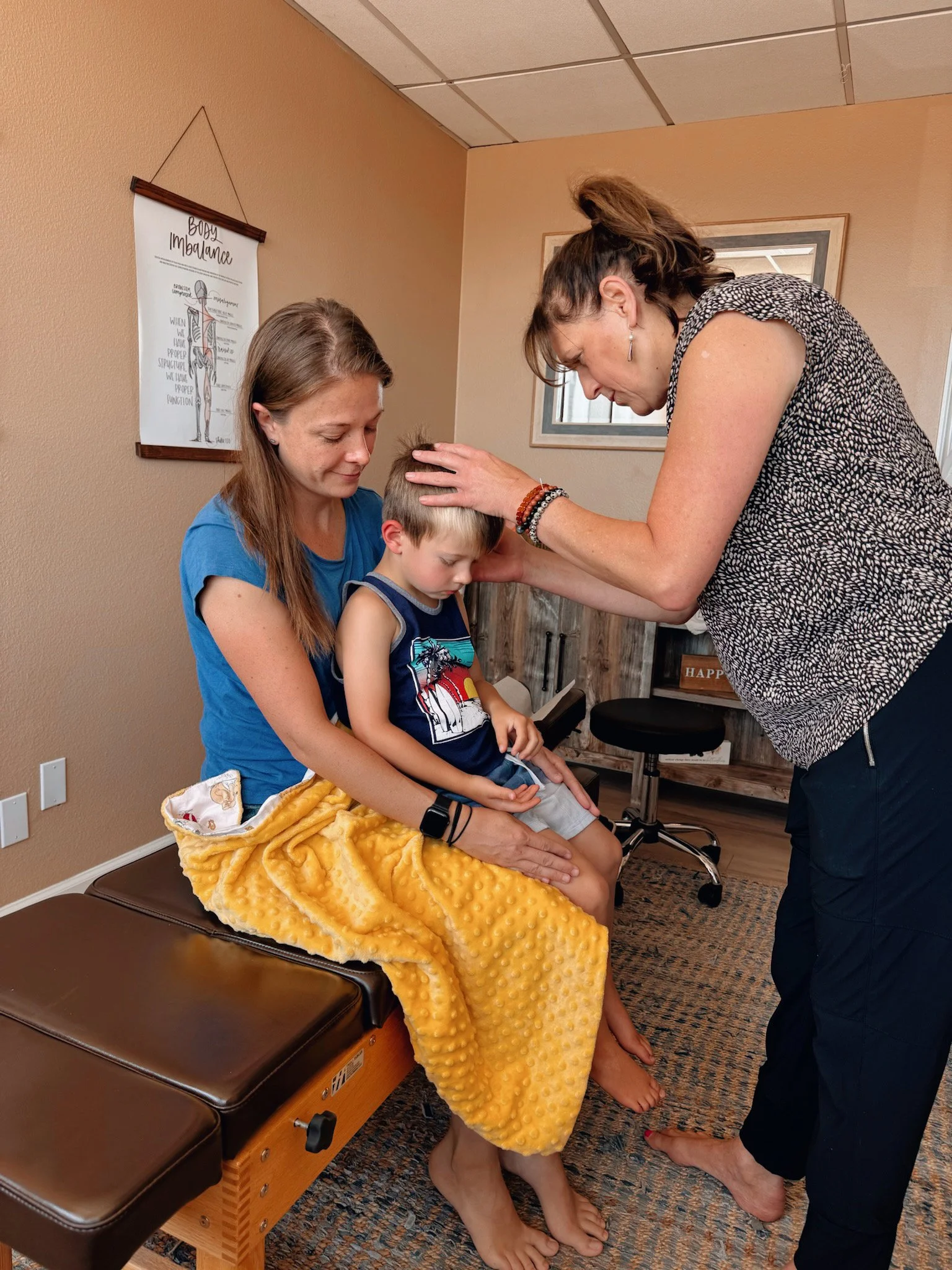
At Inspire Life Chiropractic, our role is specifically focused on the nervous system.
We use Neurological INSiGHT Scans to get an objective look at patterns of stress and nervous system function.
These scans allow us to gather information about things like autonomic regulation, neuro-muscular patterns, and how the nervous system may be adapting to stress.
For families who have already completed countless appointments and evaluations, this can provide another piece of information to consider alongside everything they already know about their child.
If chiropractic care is appropriate, our goal with Neurologically-Focused Chiropractic Care is to support healthier nervous system function, regulation, and adaptability.
And importantly, we don’t see this as replacing the other support your child may already be receiving.
OT matters.
Speech therapy matters.
Educational accommodations matter.
Mental health support may matter.
Medical care matters.
Nutrition, movement, sleep, connection, and a supportive home environment matter.
Chiropractic care can simply be another piece of a comprehensive approach to supporting your child.
Your Child Is More Than a Diagnosis
A diagnosis may explain part of your child’s story.
It may give you language for struggles you’ve witnessed for years. It may unlock resources your family desperately needed. It may even help your child better understand themselves.
But it doesn’t get to define every chapter that comes next.
Your child is still the same funny, creative, determined, sensitive, curious, loving, wonderfully individual person they were before someone wrote a diagnosis on a piece of paper.
So use the label when it serves them.
Use the accommodations.
Build the support team.
Keep asking questions.
And keep looking at the whole child.
If you’re curious about how your child’s nervous system is functioning and whether Neurologically-Focused Chiropractic Care could be another supportive piece of their care, our team at Inspire Life Chiropractic would love to help you learn more.
Reach out to our office to schedule an INSiGHT Scan and take a closer look at how your child’s nervous system is adapting to stress.
And if you’re not local to us, the PX Docs directory can help you find a Neurologically-Focused Chiropractic office near you.
Your child is not a diagnosis. Their label can provide information, resources, and support, but it doesn’t determine who they are or everything they’re capable of becoming.