Why Your Child’s Gut Won’t Heal: The Missing Piece Most Parents Never Hear About
You've cleaned up the diet.
You've added the probiotics.
You've tried the supplements, food sensitivity testing, and all the gut-healing recommendations.
And yet your child is still struggling with digestive issues, eczema, sleep challenges, mood swings, sensory sensitivities, or chronic inflammation.
If that sounds familiar, we want you to hear this first:
You haven't failed.
In fact, many parents who walk through our doors have already done an incredible amount of work to support their child's health. But what they're often missing isn't another supplement or another dietary change.
It's understanding the role of the nervous system.
The Gut Doesn't Work Alone
When most people think about gut health, they think about food.
And while nutrition absolutely matters, the gut cannot function properly without communication from the brain.
Every day, your child's nervous system is responsible for regulating:
Digestion
Nutrient absorption
Gut motility
Inflammation levels
Immune system activity
Even aspects of mood and emotional regulation
This communication happens primarily through a nerve called the vagus nerve, which acts as the main connection between the brain and the digestive system.
When that communication is working well, the body can digest, absorb, regulate, and heal more efficiently.
When that communication is disrupted, many families find themselves stuck in a cycle of constantly trying new gut protocols without seeing lasting change.
Why Gut Issues Often Show Up Alongside Other Challenges
One of the things we frequently hear from parents is:
"Why does it seem like everything is connected?"
Their child isn't just dealing with digestive issues.
They're also experiencing:
Sleep challenges
Eczema or skin flare-ups
Behavioral struggles
Emotional dysregulation
Sensory sensitivities
Frequent illness
The reason these challenges often appear together is because the nervous system helps coordinate all of them.
In fact, a significant portion of the body's immune activity occurs in and around the digestive tract, and much of the communication between the gut, immune system, and brain relies on healthy nervous system function.
When the body becomes stuck in a prolonged stress response, multiple systems can begin struggling at the same time.
The Vagus Nerve's Four Important Jobs
The vagus nerve plays a major role in helping the digestive system function properly.
Some of its most important responsibilities include:
1. Supporting Motility
Motility is the movement of food through the digestive tract.
When communication between the brain and gut becomes less efficient, some children may experience:
Constipation
Slow digestion
Bloating
Irregular bowel movements
2. Supporting Nutrient Absorption
The body must be able to absorb nutrients after they are consumed.
This is one reason why some children can eat a nutrient-dense diet yet still struggle with signs that suggest their body isn't utilizing those nutrients efficiently.
3. Supporting Assimilation
Beyond absorption, the body must properly distribute nutrients where they are needed most.
Healthy nervous system function helps coordinate this complex process.
4. Helping Regulate Inflammation
The vagus nerve is closely involved in helping the body regulate inflammatory responses.
When the nervous system is overwhelmed and stuck in stress mode, it can become more difficult for the body to shift into a state of healing and regulation.
How Stress Can Affect the Brain-Gut Connection
One of the most important things parents learn in our office is that nervous system stress can begin much earlier than expected.
Stressors can occur during:
Pregnancy
Birth and delivery
Early infancy
Illnesses and infections
Repeated antibiotic use
Environmental stressors
Physical falls and injuries
Over time, these stressors may influence how efficiently the nervous system communicates with the rest of the body.
For some children, this can contribute to patterns of dysregulation that show up as digestive, immune, sensory, behavioral, or developmental challenges.
This doesn't mean those events automatically cause problems.
Rather, they may be important pieces of the puzzle that deserve consideration when looking for answers.
Why Nutrition Still Matters (But May Not Be the First Step)
We want to be very clear:
Nutrition matters.
Healthy food matters.
Hydration matters.
Sleep matters.
Movement matters.
Supplements can be helpful tools in the right circumstances.
But if the nervous system is overwhelmed and struggling to regulate, families may find that they're working incredibly hard without seeing the progress they expected.
A helpful way to think about it is this:
Nutrition provides the raw materials.
The nervous system helps coordinate how those materials are used.
Both are important.
But when communication between the brain and body improves, many families find that the healthy habits they've already implemented begin working more effectively.
What We Look For at Inspire Life Chiropractic
At Inspire Life Chiropractic, we begin by looking at the nervous system.
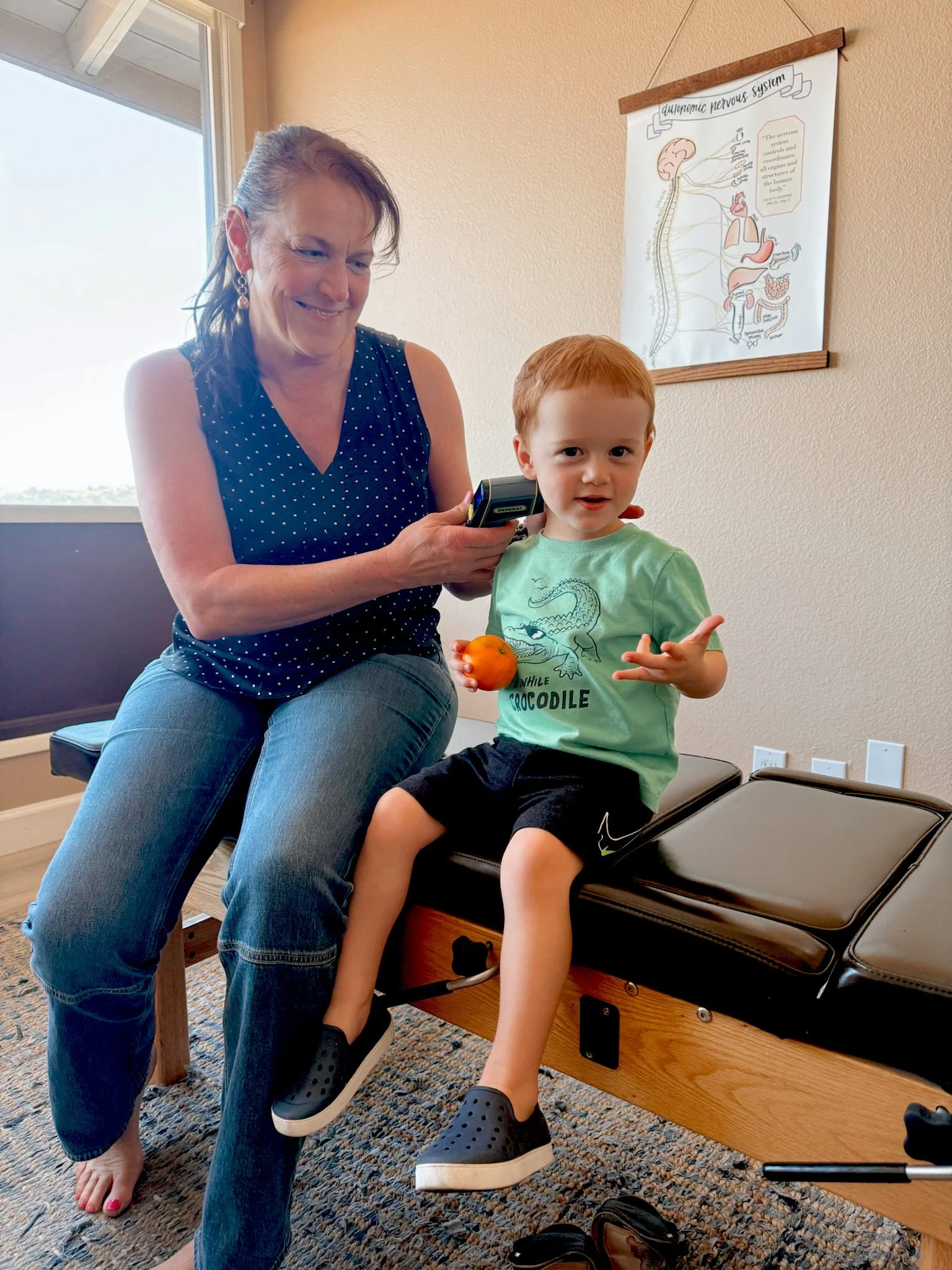
Using INSiGHT Scans, we evaluate how well your child's nervous system is adapting to stress and whether patterns of dysregulation may be present.
These scans allow us to gather objective information about how the brain and body are communicating.
From there, we create a personalized plan focused on helping support nervous system regulation through gentle, neurologically-focused chiropractic care.
Our goal is not simply to focus on symptoms.
Our goal is to help the body function more efficiently so that all of the other healthy choices you're making have the opportunity to work together.
The Missing Piece May Not Be Another Gut Protocol
If you've been doing all the "right" things and still feel stuck, please know that you're not alone.
Many parents arrive in our office exhausted from trying everything they can think of.
Often, the missing piece isn't more effort.
It's looking upstream at the nervous system and understanding how deeply it influences digestion, immunity, sleep, behavior, and overall health.
When the nervous system becomes more regulated, the body is often better able to heal, adapt, and function the way it was designed to.
Ready to Learn More?
If your child is struggling with digestive challenges, eczema, sleep issues, sensory concerns, or chronic stress patterns, we'd love to help you uncover whether nervous system dysregulation may be playing a role.
Schedule a Neurological INSiGHT Scan with our team and let's start putting the pieces together.
Because your child deserves more than symptom management.
They deserve answers. 💛