
Why Your Child Can't Sleep (And It's Not What You Think)
You’ve tried everything.
Earlier bedtimes. Blackout curtains. Melatonin. White noise machines. Sticking to a routine. You’ve read the books, followed the advice, and done everything you’ve been told should help… and your child is still wide awake at night, exhausted but unable to fall asleep.
If this is your family right now, we want you to hear this first.
You are not failing at bedtime.
And your child is not being difficult.
What you’re seeing, that “tired but wired” pattern, is often a nervous system that is having a hard time settling into rest.
And when the nervous system is stuck in a stress response, even the best routines and tools can only go so far.
In this post, we’re going to walk through what may actually be going on beneath the surface, and how you can begin to support your child in a deeper, more lasting way.
Did You Know? Approximately 35% of children in the United States aren't getting enough sleep. That's more than 1 in 3 kids starting their day running on empty.
And in our office, we see this more often than most parents expect.
So if this is something your family is navigating, you’re not alone. And more importantly, there are answers.
Sleep Is Not Just Rest — Here's What It's Actually Doing
It’s easy to think of sleep as simply downtime.
But in reality, sleep is one of the most important times for your child’s nervous system to restore, process, and grow.
While your child sleeps, their body is:
Organizing and storing everything they learned that day
Releasing growth hormone to support development
Strengthening the immune system
Processing emotions and stress from the day
Repairing tissues and restoring energy
This is why sleep affects so much more than just how tired your child feels.
When the nervous system isn’t able to access deep, restorative sleep, you may start to notice it show up in other areas like behavior, focus, immune health, and emotional regulation.
Sleep is not just one piece of health. It is a foundation.
The Real Reason Your Child Can't Sleep: The Nervous System
Many sleep approaches focus on routines, environment, or habits.
And while those things can be helpful, they don’t always address what is happening underneath it all.
Sleep is actually a nervous system function.
Your child’s body is constantly shifting between two states:
A “gas pedal” state that keeps them alert, aware, and ready to respond
A “brake pedal” state that allows the body to slow down, regulate, and rest
For sleep to happen naturally, the nervous system needs to shift into that “brake” state.
But when there is interference in the nervous system, what we call subluxation, that shift can become more difficult.
So instead of winding down easily, your child’s system may stay more “on” than it should.
Even when they are exhausted.
This is why it can feel like their body won’t fully settle at night.
It is not about them refusing sleep. It is about their nervous system not being able to fully access it yet.
How "The Perfect Storm" Disrupts Sleep From the Very Beginning
For many children, sleep challenges are not caused by just one thing.
They are often the result of layers of stress building over time. At ILC, we call this “The Perfect Storm.”
During Pregnancy
A mother’s experience during pregnancy plays an important role in how a baby’s nervous system develops.
When stress levels are high, stress hormones like cortisol can cross the placenta and influence how the baby’s nervous system learns to respond to the world.
This can sometimes create a system that is more sensitive or more easily triggered into stress.
This is not about doing anything wrong. It is about understanding how early this process can begin.
During Birth
Birth is a big transition for both mom and baby.
Interventions such as inductions, C-sections, forceps, vacuum extraction, or physical stress during delivery can place strain on a baby’s developing nervous system.
This is especially important in the upper neck area, where the vagus nerve exits.
The vagus nerve plays a key role in helping the body rest, digest, and sleep.
If there is tension or irritation in this area, it can make it harder for the nervous system to fully shift into a calm and regulated state.
In Early Childhood
As your child grows, additional stressors can continue to build.
Things like:
Antibiotic use
Digestive challenges like reflux or constipation
Frequent illness
Ongoing environmental or physical stress
Each of these adds another layer.
Over time, the nervous system can become overwhelmed and have a harder time adapting and regulating.
Often, sleep challenges are one of the earliest signs that the nervous system is under stress.
What Happens When Sleep Problems Go Unaddressed
When a child is not getting enough quality sleep, it does not just affect nighttime.
It can begin to impact many areas of their development.
You may notice:
Difficulty focusing or staying on task
Increased energy that feels more like restlessness than true energy
Emotional ups and downs or bigger reactions
Getting sick more often
Challenges with learning or memory
Sometimes, these patterns can even look similar to conditions like ADHD.
But what we often see is a nervous system that is simply running on empty.
Children do not always show exhaustion by slowing down.
They often show it by becoming more reactive, more sensitive, and more overwhelmed.
What Actually Works: Getting to the Root Cause
Instead of only focusing on sleep routines or external tools, it can be helpful to look at how the nervous system itself is functioning.
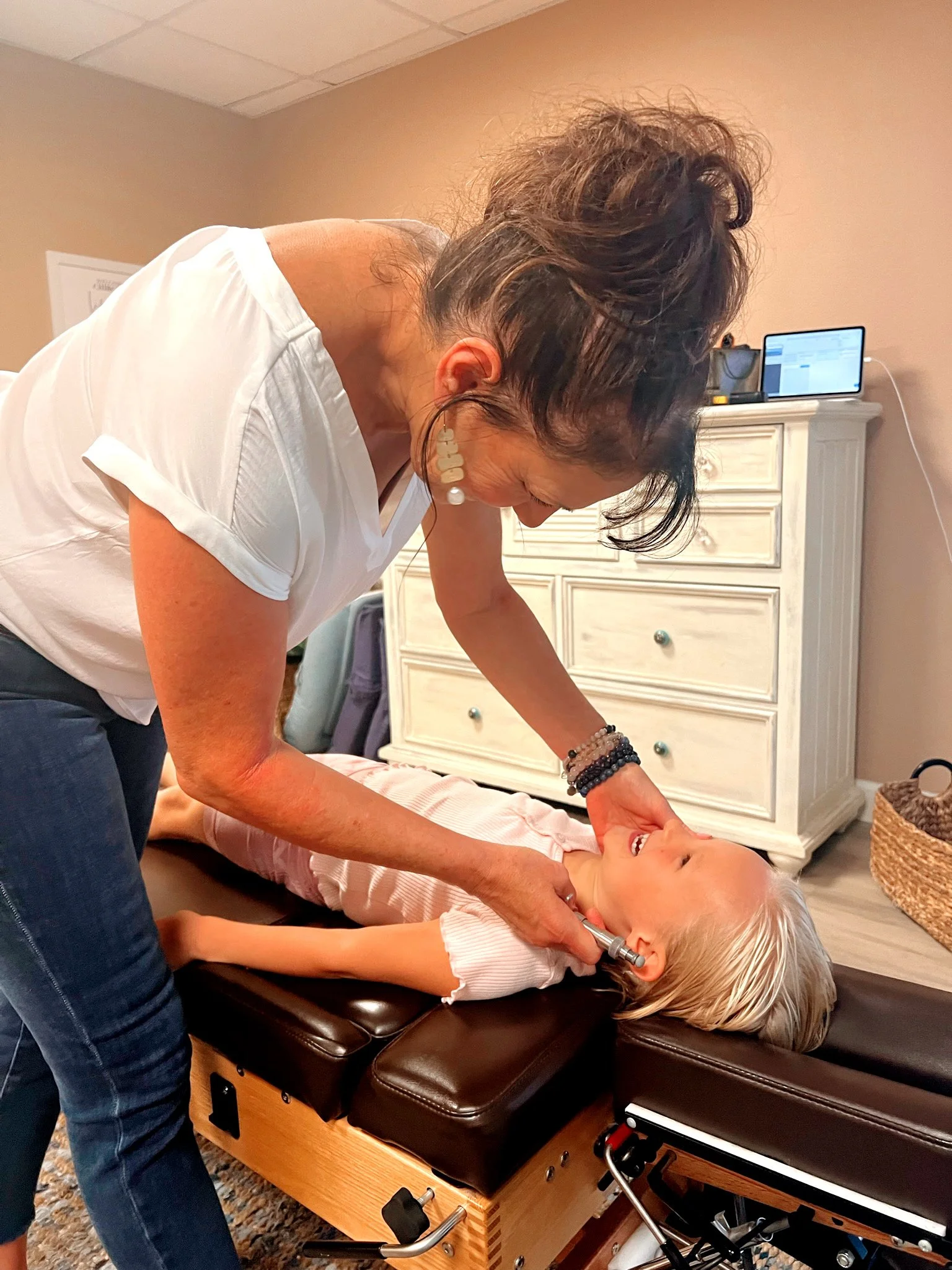
Neurologically-focused chiropractic care is designed to support the nervous system from the inside out.
Through gentle, specific adjustments, we work to:
Reduce interference in the nervous system
Improve communication between the brain and body
Support the body’s ability to adapt and regulate
As the nervous system begins to function more efficiently, it becomes easier for your child to shift into rest.
Sleep is no longer something that has to be forced.
It becomes something the body can access more naturally.
How We Measure What's Happening
One of the most important parts of care is understanding what is actually going on.
Using INSiGHT scans, we are able to look at:
How your child’s nervous system is functioning
Where stress or imbalance may be present
How well they are able to shift between active and rest states
This allows us to create a clear, personalized plan without guessing.
Many parents begin to notice improvements in sleep first, followed by changes in digestion, immune function, behavior, and overall resilience.
When the nervous system is supported, everything else can begin to follow.
Sleep Is the Foundation
When your child is able to access deep, restorative sleep, it supports every other area of their health.
Better sleep can lead to:
Improved emotional balance
Stronger immune function
Better focus and learning
More adaptability and resilience
This is not about doing more or trying harder.
It is about understanding what your child’s body needs and supporting it at the right level.
If your child is struggling with sleep, it is not something they simply have to outgrow.
It may be a sign that their nervous system needs support.
And there is a path forward.
If you are ready to look deeper, we would love to help.
Reach out to us to schedule your child’s INSiGHT scans and begin supporting their sleep from the inside out!