
What Doctors Won’t Tell You About Sensory Overload
Does this sound familiar? Your child suddenly covers their ears in a busy restaurant. A quick grocery run turns into tears and overwhelm. Clothing tags feel unbearable. Loud environments lead to meltdowns that seem to come out of nowhere.
As a parent, these moments can feel heavy and isolating. You may have been told it is just behavior, a phase, or something your child will eventually grow out of. But deep down, your gut tells you there is more going on.
And you are right. What you are seeing is not defiance or weakness. It is your child’s nervous system asking for support.
The Reality of Sensory Processing Challenges
If you are reading this, chances are you have watched your child struggle in ways that are hard to explain to others. You are not alone in this.
More and more families are navigating sensory challenges today. In fact, recent CDC data shows a significant rise in chronic childhood conditions, including sensory processing difficulties. We are seeing more sensitive nervous systems, more overwhelm, and more kids who feel overstimulated by the world around them.
This does not mean something is wrong with your child. It means their nervous system may be working harder than it should.
Understanding Overstimulation: More Than Just Behavior
When a child becomes overstimulated, it can look like sudden emotional outbursts, shutdowns, or intense reactions to sound, touch, or movement. But this is not a behavioral choice.
Think of your child’s nervous system like a communication highway. When too much information is coming in at once and the system cannot organize it efficiently, everything backs up. The brain struggles to filter what is important and what is not.
This is not about willpower. It is about how the brain and nervous system are processing the environment.
The Autonomic Nervous System: Your Child’s Control Center
Your child’s nervous system has two main branches that work together to create balance.
The sympathetic system is responsible for alertness and protection. This is often called fight or flight.
The parasympathetic system supports rest, digestion, and regulation.
When a child experiences repeated stress or overwhelm, their nervous system can get stuck in sympathetic mode. Their body stays on high alert, even when there is no immediate danger.
When this happens, parents often notice patterns like:
Difficulty sleeping
Digestive challenges
Big emotional swings
Heightened sensitivity to sound, light, or touch
These are not separate issues. They are connected through the nervous system.
The Perfect Storm: Understanding Your Child’s Sensory Challenges
Sensory challenges rarely come from one single cause. More often, they develop from a combination of factors that stack over time. We often refer to this as a perfect storm.
Prenatal influences
Stress during pregnancy can shape how a baby’s nervous system develops and responds to the world.
Birth experiences
Interventions such as C sections, forceps, or vacuum assistance can place physical stress on the nervous system during a critical time of development.
Early childhood factors
Environmental stressors, illnesses, falls, or developmental challenges can further impact regulation as a child grows.
Each layer adds stress to the system, and over time, the nervous system may struggle to adapt.
Recognizing When Your Child Is Overstimulated
Every child shows sensory overload a little differently, but many parents notice patterns that repeat.
Physical signs may include:
Headaches
Stomach discomfort or nausea
Unusual or sudden fatigue
Emotional signs may include:
Increased irritability
Anxiety that seems to rise quickly
Big emotional reactions that feel out of proportion
Behavioral signs may include:
Difficulty focusing or transitioning
Frequent meltdowns
Seeking quiet, dark, or enclosed spaces
These are all signals from the nervous system, not misbehavior.
A Different Approach to Help
Many traditional approaches focus on avoiding triggers or managing symptoms. While those strategies can help in the moment, they do not always address why the nervous system is struggling in the first place.
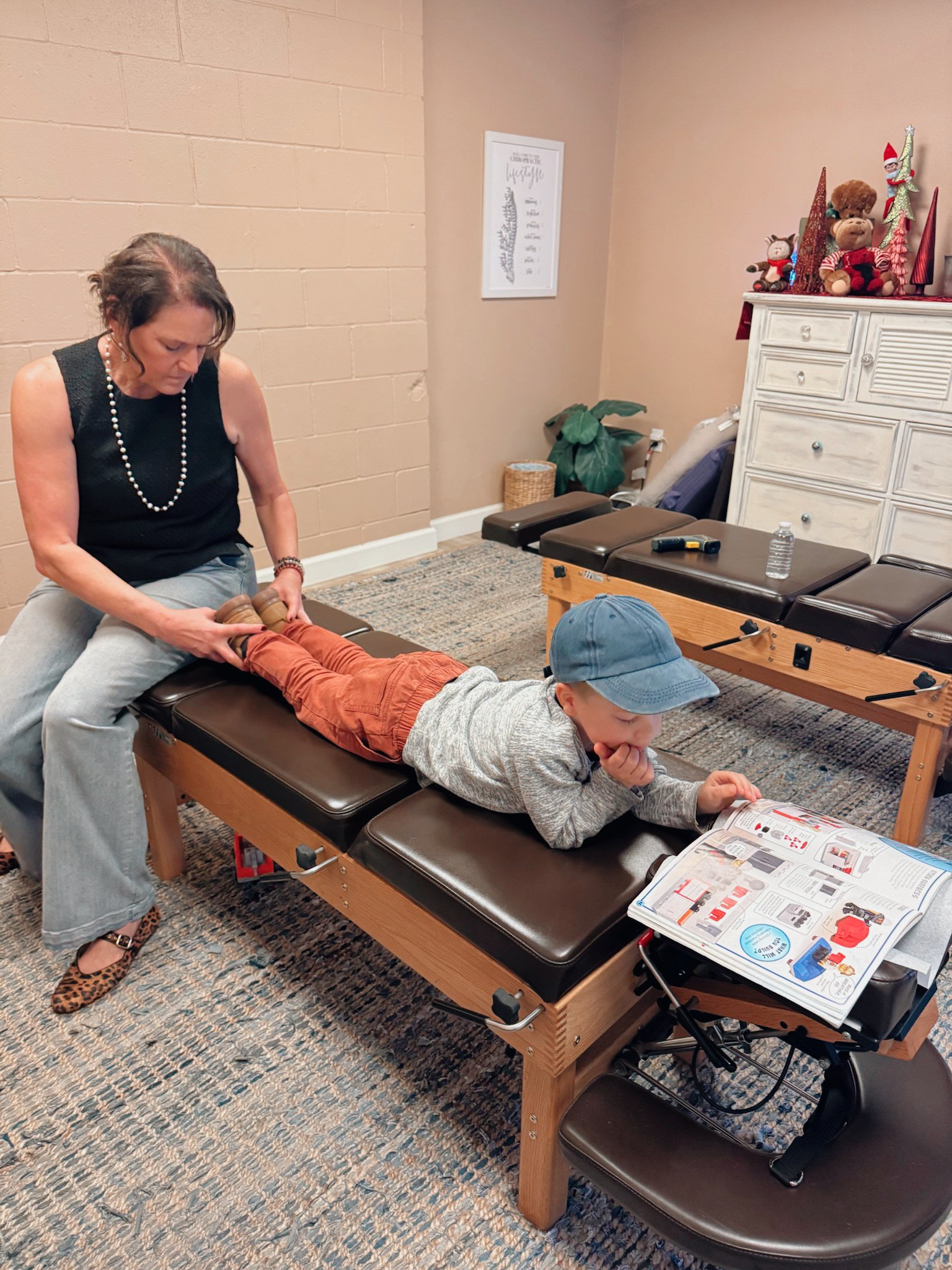
Neurologically focused chiropractic care looks at sensory challenges through a different lens. Instead of asking what behavior needs to be corrected, we ask how the nervous system is functioning and where it may be stuck in stress mode.
At Inspire Life Chiropractic, we use INSiGHT Scans to gently and objectively assess how your child’s nervous system is adapting. These scans are non invasive and can be done while your child sits comfortably, even in your lap. They give us clear information about areas of stress and imbalance within the nervous system.
From there, gentle and specific adjustments are used to help release stored sympathetic stress and support activation of the parasympathetic system. This allows the nervous system to regulate more efficiently and respond to sensory input with greater ease.
Moving Forward
Your child is not choosing to be overwhelmed. Their nervous system is doing the best it can with the information it is receiving.
The encouraging news is that nervous systems are adaptable. With the right support, many children experience improved regulation, calmer responses, better sleep, and an increased ability to engage with the world around them.
You are not alone on this journey. Many families are walking this path, and there is hope.
We would love to support you. Please reach out to our team to schedule a consultation. If you are not local to us, we encourage you to explore the PX Docs directory to find a neurologically focused chiropractic office near you.
Your child’s sensitivity is not a flaw. It is part of who they are. With understanding, support, and the right care, their nervous system can learn to feel safe, balanced, and capable in a world that once felt overwhelming.